Going rogue

Janet Evanovich
Monday mornings aren’t supposed to be fun, but they should be predictable. However, on this particular Monday, Stephanie Plum knows that something is amiss when she turns up for work at Vinnie’s Bail Bonds to find that longtime office manager Connie Rosolli, who is as reliable as the tides in Atlantic City, hasn’t shown up.

Stephanie’s worst fears are confirmed when she gets a call from Connie’s abductor. He says he will only release her in exchange for a mysterious coin that a recently murdered man left as collateral for his bail. Unfortunately, this coin, which should be in the office—just like Connie—is nowhere to be found.

The quest to discover the coin, learn its value, and save Connie will require the help of Stephanie’s Grandma Mazur, her best pal Lula, her boyfriend Morelli, and hunky security expert Ranger. As they get closer to unraveling the reasons behind Connie’s kidnapping, Connie’s captor grows more threatening and soon Stephanie has no choice but to throw caution to the wind, follow her instincts, and go rogue.

Full of surprises, thrills, and humor, Going Rogue reveals a new side of Stephanie Plum, and shows Janet Evanovich at her scorching, riotous best.
The war pianist

Mandy Robotham
Blitz-ridden London: Marnie Fern’s life is torn apart when her grandfather is killed in an air raid. But once she discovers that he’d been working undercover as a radio operative – or Pianist – for the Dutch resistance, Marnie knows she must complete his mission – no matter the cost…

Nazi-occupied Amsterdam: At the other end of the wireless, fellow pianist Corrie Bakker is caught in a dangerous game of cat-and-mouse as she desperately tries to keep her loved ones out of the line of fire – even if it means sacrificing herself…

Bound together by the invisible wires of their radios, the two women lead parallel lives in their home cities, as both are betrayed by those they trust the most. But when the Nazis close in on one of them, only the other can save her…
Two cities. Two spies. But which woman survives?

A woman’s work

Victoria Purman
It’s 1956, and while Melbourne is in a frenzy gearing up for the Olympics, the women of Australia are cooking up a storm for their chance to win the equivalent of a year’s salary in the extraordinary Australian Women’s Weekly cookery contest.

For two women, in particular, the prize could be life-changing. For war widow and single mum Ivy Quinn, a win would mean more time to spend with her twelve-year-old son, Raymond. Mother of five Kathleen O’Grady has no time for cooking competitions, but the prize could offer her a different kind of life for herself and her children, and the chance to control her own future.

As winter turns to spring both women begin to question their lives. For Kathleen, the grinding domesticity of her work as a wife and mother no longer seems enough, while Ivy begins to realise she has the courage to make a difference for other women and tell the truth about the ghosts from her past.

But is it the competition prize that would give them a new way of seeing the world – a chance to free themselves from society’s expectation and change their own futures – or is it the creativity and confidence it brings?

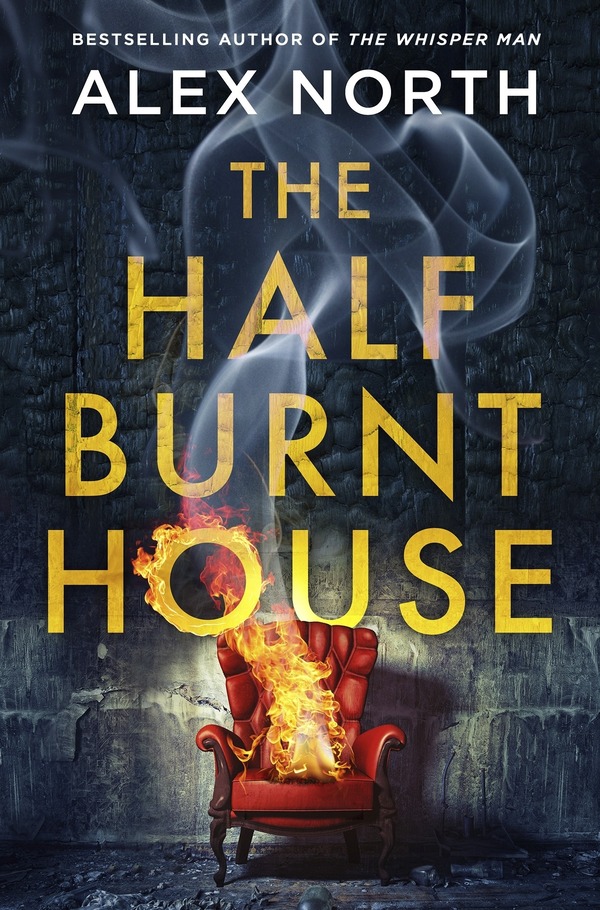
The half burnt house

Alex North
Katie always looked after her beloved younger brother Chris—until she left him alone for one selfish afternoon, and their picture-perfect family fell apart. Although Chris survived the attack, the scars ran deeper than the ones left across his face. Now they’re adults, and they haven’t spoken in years. Then she gets a call, from Detective Laurence Page.

Page is facing an unusually disturbing crime scene. Alan Hobbes, a distinguished and wealthy philosophy professor, has been brutally murdered. Hobbes was living in a sprawling mansion—but one that remains half-ruined by a decades-old fire, wind and rain howling through the gaping, creaking roof.

Page only has one suspect: Chris, caught on CCTV at the house. But he has plenty of questions. What could cause a man as wealthy as Hobbes not to repair his home? Why did he seem to know his death was coming, yet do nothing to stop it? And why was he obsessed with a legendary local serial killer?

But Katie only has one thing on her mind. She knows this is her last, best chance to finally save her brother, and make up for her negligence all those years ago.

The angry women’s choir

Meg Bignell
Once in a while, everyone needs to be heard. Freycinet Barnes has built herself the perfect existence. With beautiful children, a successful husband and a well-ordered schedule, it’s a life so full she simply doesn’t fit.

When she steps outside her calendar and is accidentally thrown into the generous bosom of the West Moonah Women’s Choir, she finds music, laughter, friendship and a humming wellspring of rage. With the ready acceptance of the colourful choristers, Frey learns that voices can move mountains, fury can be kind and life can do with a bit of ruining.

Together, Frey and the choir sing their anger, they breathe it in and stitch it up, belt it out and spin it into a fierce, driving beat that will kick the system square in the balls, and possibly demolish them all.

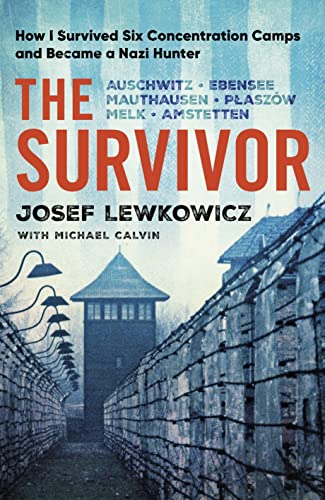
The survivor

Josef Lewkowicz
One of the last great untold stories of the Holocaust, The Survivor is an astonishing account of one man’s unbreakable spirit, unshakeable faith, and extraordinary courage in the face of evil. At only sixteen years old, Josef Lewkowicz became a number, prisoner 85314. Following the Nazi invasion of Poland, he and his father were separated from their family and herded to the Kraków-Plaszów concentration camp. Forced to carry out hard labour in brutal conditions, and to live under the constant threat of extreme violence and sudden death, before the war was over Josef would witness the unique horrors of six of the most notorious Nazi concentration camps, including Auschwitz, Mauthausen and Ebensee.

From salt mines to forced marches, summary executions to Amstetten, where prisoners were used as human shields in Allied bombing, Josef lived under the spectre of death for many years. When he was liberated from Ebensee at the end of the war, conditions were amongst the worst witnessed by allied forces.

With his freedom, Josef returned home to find that he was the only one left alive in an extended family of 150. Compelled by the need to do something to avenge that loss, he joined the Jewish police while still in a displaced persons’ camp, and was recruited as an intelligence officer for the US Army who gave him a team to search for Nazis in hiding.

Whilst rounding up SS leaders, he played a critical role in identifying and bringing to justice his greatest tormentor, the Butcher of Plaszow, Amon Göth, played by Ralph Fiennes in Schindler’s List. He then committed his life to helping the orphaned children of the Holocaust rebuild their lives.

Pardon my French

Rachael McIntosh
At the school gate, when she accidentally kissed one new friend on the nose and called another a ‘beautiful man-horse’, Rachael realised that small-town France could hardly be more different to beach-side Australia. The smell of cigarettes replaced the tang of bone-broth and sprouted sourdough, the neighbours sometimes came to blows and under no circumstances would anyone wear activewear in public. Ever.

Muddling through every interaction in terrible French pushed Rachael’s family to their limits. Some days, everybody cried and ate their feelings with almond croissants. But the town of Sommières embraced these ragtag Australians, and the family fell in love with their temporary hometown and its outrageous gossip, cobblestoned beauty and kind, eccentric inhabitants.

Pardon My French is a candid, hilarious love letter to family life and France with three valuable lessons for overcoming adversity: make home a beautiful nest, lean into the tough lessons and look for the comedy in everything.

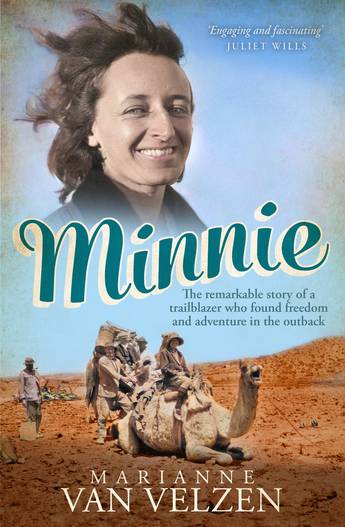
Minnie

Marianne van Velzen
The inspiring story of a feisty pioneering woman who sought freedom and adventure in the outback and became the first woman to work as an opal miner in Australia. People always asked her if she was ever afraid, living out in the desert alone with all those rough and scruffy men. But Minnie Berrington was not the faint-hearted type, and never had been. Being tough came naturally to her, growing up with three brothers and a family that went from riches to ruins.

Only a slip of a girl, Minnie could match any man in stamina, perseverance and strength. She arrived in Coober Pedy when camels still brought in essential supplies, and water was so scarce that no-one washed. Together with the other miners, she braved the heat, the flies and the dust. Every day she waited for that special sound the pick made when it cracked opal.

The first woman to dig her own shafts in the Australian opal fields, Minnie began her working life as a typist in London. But she and her younger brother, Victor, sought freedom and adventure in the 1920s and found plenty of it in the outback.

The bookseller at the end of the world

Ruth Shaw
A rich, immersive, funny and heartbreaking memoir of the charming bookseller who runs two tiny bookshops in the remote village of Manapouri in Fiordland, in the deep south of New Zealand.

Ruth Shaw weaves together stories of the characters who visit her bookshops, musings about favourite books, and bittersweet stories from her full and varied life.

She’s sailed through the Pacific for years, been held up by pirates, worked at Sydney’s Kings Cross with drug addicts and prostitutes, campaigned on numerous environmental issues, and worked the yacht Breaksea Girl with her husband, Lance.

Underlining all her wanderings and adventures are some very deep losses and long-held pain. Balancing that out is her beautiful love story with Lance, and her delightful sense of humour.

Over the hill & up the wall

Todd Alexander
Of course, we love our parents. Even if they do so many things that drive us bonkers. Like how a mother – for argument’s sake, let’s say mine – taps her fingernails on the car window whenever she sees a place of interest (seven taps for a regular haunt, up to twenty for somewhere fascinating).

Or the way a father – let’s call him Dad – practises deafness but can miraculously hear a suggestion of no ham at Christmas over the roar of cricket commentary. It might be the way your mum works herself into a tizz over a call from Azerbaijan one week and Nigeria the next. Or how your dad has an answer to everything (despite his information being forty years out of date) and ‘a guy’ for all fixes (if only he could find his Rolodex).

When do we stop being our parents’ child and become their parent? After all, they did pretty well on their own for decades – why do they need our intervention now? And that tendency for them to drive us up the wall … could it be because we are entering middle age and starting to recognise some of those traits in ourselves?

3 Main St Buderim - QLD 4556
(07) 5445 3779