The Year Everything Changed

The Year Everything ChangedPhillipa McGuiness

On New Year’s Eve 2001, with her husband by her side, Phillipa McGuinness buried her son. They stood with a young priest in Chua Chu Kang Cemetery and watched a small coffin go into the ground. Later that night, shattered, they sat looking out at the hundreds of ships waiting to come into port in Singapore’s harbor. Or trying to leave, who could tell? Each of them thinking about the next year, starting within hours. Phillipa wanted time to push on, for 2001 to be over, but she was also scared. What might be next?

2001 was an awful year. It’s the only year where you can mention a day and a month using only numbers and everyone knows what you mean. But 9/11 wasn’t the only momentous event that year. In Australia a group of orange-jacketed asylum seekers on deck the Norwegian vessel Tampa seemed responsible for Prime Minister John Howard’s statement not long after: ‘We will decide who comes to this country and the circumstances in which they come.’ These words became his mantra during the bruising election that followed in November, both sides of politics affected by their venom and insularity, or their strength and resolve, depending on which way you looked at it.

The year had started with what was supposed to be a celebratory event of sophistication and nuance, reflecting the kind of country we hoped we had become. Yet the Centenary of Federation on 1 January turned out to be a class-A fizzer. The nation seemed to decide that what was really worth commemorating wasn’t the peaceful bringing together of colonial states into a Commonwealth but the doomed assault on a Turkish beach that happened fourteen years later in 1915. It is easier to animate young men dying than old men signing a constitution.

2001 marked the halfway point of twenty years of continuous economic growth in Australia. But the year started with shiny tech startups continuing their implosion following the dotcom bubble burst. The deal of the (nascent) century, the merger between Netscape and AOL, seemingly an all-powerful mega corporation, began to slide. Yet perhaps the digital world as we now know it did start in 2001, at least for what is now the most powerful company in the world. For this was the year that Google, in no hurry to launch an IPO, received its PageRank patent, assigned to Larry Page and Stanford University. The rest, as they say, is history. Apple launched the iPod in 2001, not only transforming the soundtrack to our lives but shifting cultural alignments so that distributors became the richest guys in the room, rather than the artists writing, singing and playing the songs.

If 2001 were a movie – oh wait, of course it was – its tagline might be ‘The year that changed everything’. And that change is not over.

Superhuman

SuperhumanRowan Hooper

This is a book about what it feels like to be exceptional – and what it takes to get there. Why can some people achieve greatness when others can’t, no matter how hard they try? What are the secrets of long life and happiness? Just how much potential does our species have?

In this inspirational book, New Scientist Managing Editor Rowan Hooper takes us on a tour of the peaks of human achievement. We sit down with some of the world’s finest minds, from a Nobel-prize winning scientist to a double Booker-prize winning author; we meet people whose power of focus has been the difference between a world record and death; we learn from international opera stars; we go back in time with memory champions, and we explore the transcendent experience of ultrarunners. We meet people who have rebounded from near-death, those who have demonstrated exceptional bravery, and those who have found happiness in the most unexpected ways.

Drawing on interviews with a wide range of superhumans as well as those who study them, Hooper assesses the science of peak potential, reviewing the role of genetics alongside the famed 10,000 hours of practice.

For anyone who ever felt that they might be able to do something extraordinary in life, for those who simply want to succeed, and for anyone interested in incredible human stories, Superhuman is a must-read.

Going to the Mountain

Going to the MountainNdaba Mandela

The first-ever book to tell Nelson Mandela’s life through the eyes of the grandson who was raised by him, chronicling Ndaba Mandela’s life living with, and learning from, one of the greatest leaders and humanitarians the world has ever known.

To the rest of the world, Nelson Mandela was a giant: an anti-apartheid revolutionary, a world-renowned humanitarian, and South Africa’s first black president. To Ndaba Mandela, he was simply “Granddad.” In Going to the Mountain, Ndaba tells how he came to live with Mandela shortly after he turned eleven–having met each other only once, years before, when Mandela was imprisoned at Victor Verster Prison–and how the two of them slowly, cautiously built a relationship that would affect both their lives in extraordinary ways.

It wasn’t an easy transition. Mandela had high expectations for those around him, especially his family, and Ndaba chafed at the strict rules and exacting guidelines in his grandfather’s home. But at the same time–through overheard calls from foreign dignitaries as well as the Xhosa folk wisdom that his grandfather shared with him at every opportunity–Ndaba was learning how to be a man. On a scale both personal and epic, Ndaba’s extraordinary journey mirrors that of South Africa’s coming of age–from the segregated Soweto ghettos into which he was born to the privileged life in which he grew up and the turbulent yet exciting times in which he carries on his grandfather’s legacy.

Going to the Mountain is, in the end, a story about unlocking the power within each of us. It’s a cautionary tale about how a child’s life can go one way or the other, depending upon the intervention of a caring soul–and about the awesome power of love to serve as a catalyst for change.

Carpathia

CarpathiaJay Ludowyke

In the early hours of 15 April 1912, the Cunard steamship Carpathia receives a distress call from the new White Star liner Titanic. Captain Arthur Rostron immediately turns Carpathia northwest and sails full speed through the dark night, into waters laden with icebergs, on a rescue mission that will become legendary.

Almost a century later, Carpathia’s wreck has finally been located. She’s over 500 feet down and only a few divers in the world can attain these depths. Among them is Englishman Ric Waring’s team.

In this captivating and intensively researched story, we follow the dual narratives of Rostron and the daring rescue of the Titanic survivors by Carpathia, and of Waring’s team and their dangerous determination to reach the wreck. Rich in history and drama, the true story of Carpathia from her launching to the sensational events of 1912, World War I and beyond is a compelling narrative that moves at the page-turning pace of the very best fiction.

Australians on the Western Front

Australians on the Western FrontPaul Cameron

In Australians on the Western Front 1918 Volume 1, the first in a two-part series, David Cameron tells the extraordinary story of Australian troops on the Western front in March and April of 1918. These troops were directly responsible for pushing back the German advances on the Somme towards Amiens at Dernancourt and Villers-Bretonneux and further north at Hazebrouck, saving the Channel Ports, and their actions resulted in the collapse of the German offensive which was to finally win the war for Germany. This book bears witness to the sacrifice and victories of the Australian Army Corps, which continued to provide critical support for the British forces as ‘shook troops’ despite their ongoing casualties and dwindling reinforcements.

With vivid descriptions drawing on the diaries and letters of soldiers on the battlefields, Cameron weaves together a thrilling narrative around the significant moments that marked the defeat of the great German offensive, placing their actions within the broader strategic context. The Australian victories in April 1918 enabled the British to launch their own great offensive in August 1918, in which the Australian Army Corps now led by General John Monash, would play a pivotal role in the defeat of Germany three months later (which will be covered in Volume 2).

The Scoop

The ScoopTerence J. Quinn

Journalist Jonno Bligh is flying high with a bestselling book and an Oscar for Best Screenplay. But along with the accolades he picks up a cocaine habit and a case of writers’ block.

Under pressure to deliver his next blockbuster, Jonno sails to the Indian Ocean in his beloved yacht The Scoop Jon B. When a violent storm cripples the boat he takes refuge on a beautiful remote island, where he vows to get clean. Little does he know that the murderous gangster BangBang Budiman uses the island to hide the spoils of his heists in the notorious Malaccan Strait.

Jonno watches in horror as BangBang and his crewmen brutalise two women on the beach before leaving them to die. He manages to rescue one, Annie Greenwood, whose husband has already been murdered. Together they flee the island with the stolen loot, relentlessly pursued by the vengeful BangBang.

As the killer hunts them down in the treacherous waters of South East Asia, Jonno and Annie are forced to come to terms with their own destructive demons – and a discovery that will change their lives forever.

The devil waits for you … even in paradise

In the Midst of Winter

In the Midst of WinterIsabel Allende

In the Midst of Winter begins with a minor traffic accident—which becomes the catalyst for an unexpected and moving love story between two people who thought they were deep into the winter of their lives. Richard Bowmaster—a 60-year-old human rights scholar—hits the car of Evelyn Ortega—a young, undocumented immigrant from Guatemala—in the middle of a snowstorm in Brooklyn. What at first seems just a small inconvenience takes an unforeseen and far more serious turn when Evelyn turns up at the professor’s house seeking help. At a loss, the professor asks his tenant Lucia Maraz—a 62-year-old lecturer from Chile—for her advice. These three very different people are brought together in a mesmerizing story that moves from present-day Brooklyn to Guatemala in the recent past to 1970s Chile and Brazil, sparking the beginning of a long overdue love story between Richard and Lucia.

Exploring the timely issues of human rights and the plight of immigrants and refugees, the book recalls Allende’s landmark novel The House of the Spirits in the way it embraces the cause of “humanity, and it does so with passion, humor, and wisdom that transcend politics” (Jonathan Yardley, The Washington Post). In the Midst of Winter will stay with you long after you turn the final page.

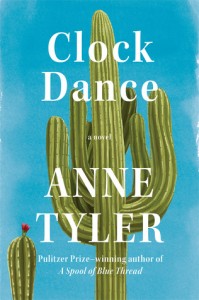
Clock Dance

Clock DanceAnne Tyle

Willa Drake can count on one hand the defining moments of her life: when she was eleven and her mother disappeared, being proposed to at twenty-one, the accident that would make her a widow at forty-one. At each of these moments, Willa ended up on a path laid out for her by others.

So when she receives a phone call telling her that her son’s ex-girlfriend has been shot and needs her help, she drops everything and flies across the country. The spur-of-the-moment decision to look after this woman – and her nine-year-old daughter, and her dog – will lead Willa into uncharted territory. Surrounded by new and surprising neighbours, she is plunged into the rituals that make a community and takes pleasure in the most unexpected things.

A bittersweet novel of hope and regret, fulfillment and renewal, Clock Dance brings us the everyday life of a woman who decides it’s never too late to change direction, and choose your own path.

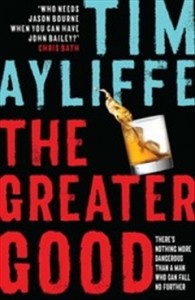
The Greater Good

The Greater GoodTim Aycliffe

Tim Ayliffe has been a journalist for almost 20 years and is the Managing Editor of Television and Video for ABC News. He has also worked as TV News Editor for ABC News and the Executive Producer of ABC News Breakfast. Before joining the ABC in 2006, Tim worked in London for Sky News as a digital and television journalist. The Greater Good is the first book in a three-book series featuring John Bailey. When he’s not writing or chasing news stories Tim rides bikes and surfs. He lives in Sydney with his wife, Justine Dougherty, and their two children, Penelope and Arthur.

Watch the video here – https://www.youtube.com/watch?v=zzKls…

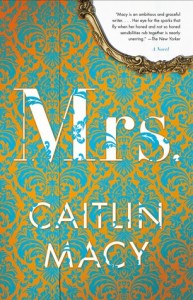
Mrs.

Mrs.Caitlin Macy

In the well-heeled milieu of New York’s Upper East Side, coolly elegant Philippa Lye is the woman no one can stop talking about. Despite a shadowy past, Philippa has somehow married the scion of the last family-held investment bank in the city. And although her wealth and connections put her in the center of this world, she refuses to conform to its gossip-fueled culture.

Then, into her precariously balanced life, come two women: Gwen Hogan, a childhood acquaintance who uncovers an explosive secret about Philippa’s single days, and Minnie Curtis, a newcomer whose vast fortune and frank revelations about a penurious upbringing in Spanish Harlem put everyone on alert.

When Gwen’s husband, a heavy-drinking, obsessive prosecutor in the US Attorney’s Office, stumbles over the connection between Philippa’s past and the criminal investigation he is pursuing at all costs, this insulated society is forced to confront the rot at its core and the price it has paid to survive into the new millennium.

Macy has written a modern-day House Of Mirth, not for the age of railroads and steel but of hedge funds and overnight fortunes, of scorched-earth successes and abiding moral failures. A brilliant portrait of love, betrayal, fate and chance, Mrs marries razor-sharp social critique and page-turning propulsion into an unforgettable tapestry of the way we live in the 21st Century.

3 Main St Buderim - QLD 4556
(07) 5445 3779