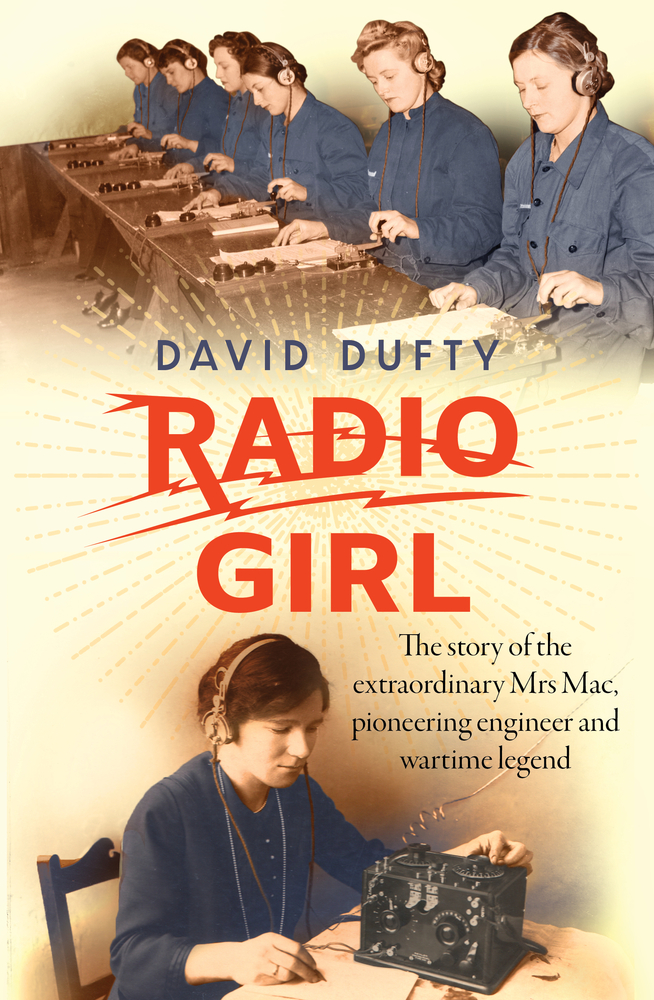
Radio girl

David Dufty
As you climbed the rickety stairs of an old woolshed at Sydney harbor in 1944, you could hear rows of men and women in uniforms and headsets tapping away vigorously at small machines, under the careful watch of their young female trainers. Presiding over the cacophony was a tiny woman, known to everyone as “Mrs Mac,” one of Australia’s wartime legends. A smart girl from a poor mining town, Violet McKenzie became an electrical engineer, a pioneer of radio, and a businesswoman.

As the clouds of war gathered in the 1930s, she trained young women in Morse code, foreseeing that their services would soon be needed. She was instrumental in getting Australian women into the armed forces.
Mrs Mac was adored by the thousands of young women and men she trained, and she came to be respected by the defense forces and the public too for her vision and contribution to the war effort. David Dufty brings her story to life in this heartwarming and captivating biography.
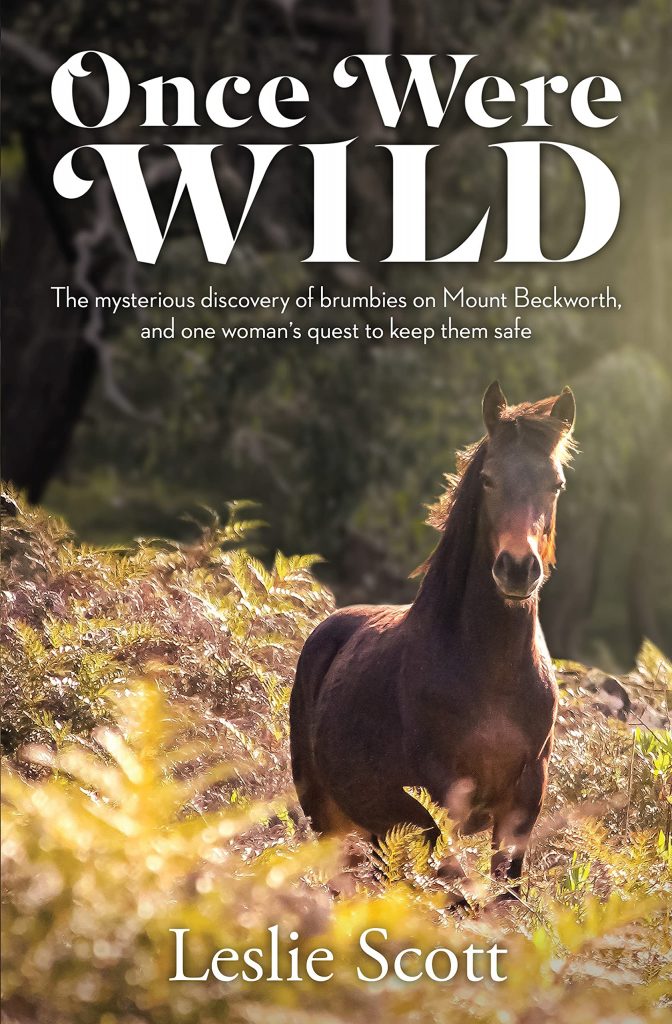
Once were wild

Leslie Scott
A captivating memoir about a woman’s passion to save the wild brumbies who mysteriously appeared on the rugged landscape of the Mount Beckworth State Forest. When Leslie Scott discovers two brumbies living on the rugged Mount Beckworth, she almost can’t believe it. Brumbies don’t live in these parts, and the terrain is not suited to them, so how did they get there? The horses are scared and unused to people, but the Mount is not a safe place for horses.

With the weather warming waterholes are drying up and food is getting scarce, and there have been rumours that logging is about to begin on the Mount. Looking into the eyes of the young Bay she names Milo Leslie knows it’s up to her to gain his and his companion Lucy’s trust and get them down to safety. Every day for months Leslie makes the hike up the Mount, slowly but surely gaining the trust of Milo and Lucy, but there are other mysterious things happening on the Mount-bones being rearranged into different shapes-and always the question, who had left the horses up here in the first place? Once Were Wild is a fascinating and heart-warming story about a woman and her resilience and determination to do what’s right for two beautiful brumbies.

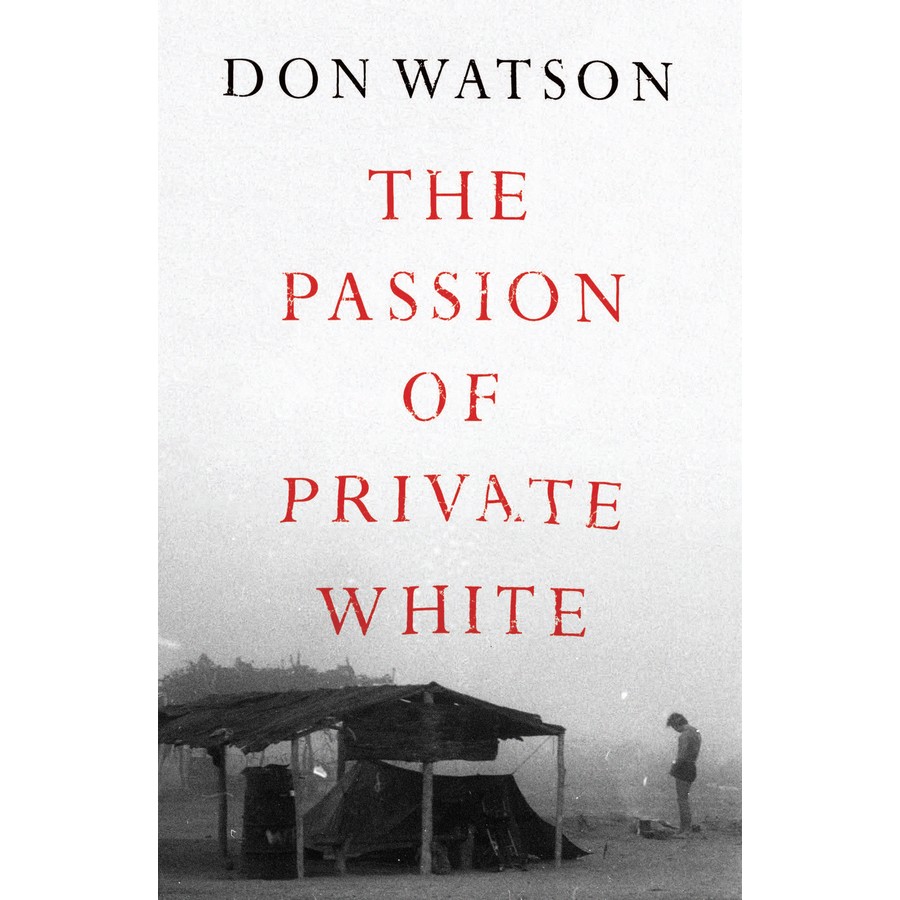
The passion of Private White

Don Watson
The Passion of Private White describes the meeting of two worlds: the world of the fiercely driven biologist and anthropologist Neville White, and the world of the hunter-gatherer clans of remote northern Australia he studied and lived with. As White tried to understand the world as it was understood on the other side of the vast cultural divide, he was also trying to transcend the mental scars he suffered on the battlefields of Vietnam. The clans had their own injuries to deal with, as they tried to adapt to modernity, live down their losses and yet hold onto their ancient lands, customs, laws and language.

Over five decades, White mapped in astonishing detail the culture and history of the Yolgnu clans at Donydji in north-east Arnhem Land. But eventually presence meant involvement, and White became advocate more than anthropologist in the clan’s struggle to survive when everything – from the ambitions of mining companies and a zombie bureaucracy, to feuds, sorcery and magic, despair and dysfunction – conspired to destroy them.

And the fifty-year endeavour served another purpose for White and the members of his old platoon he took there. Working to help the community at Donydji became a kind of antidote for the psychic wounds of Vietnam. While for the clans, from the old warriors to the children, their fanatical benefactor offered a few rays of meaning and hope. There was no cure in this meeting of two worlds, both suffering their own form of PTSD, but they helped each other survive.
This is a miniature epic of human adaptation, suffering and resilience, an astonishing window into both our recent and our deep history, the coloniser and colonised – indeed into the human condition itself.

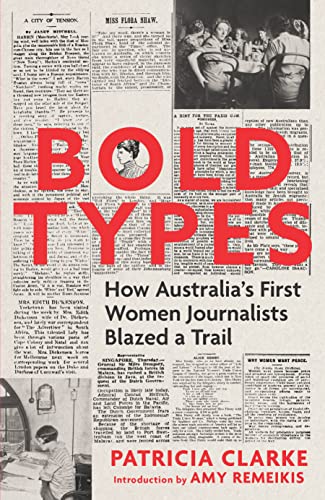
Bold types

Patricia Clarke
Together, stories of women from Anna Blackwell and Flora Shaw to Janet Mitchell and Caroline Isaacson, illustrate the gains and setbacks of women journalists over nearly a century. In each successive story, the tenacious determination of these women stands clear against the background of the prevailing patriarchy.

Patricia Clarke was a trailblazer herself as the only woman on the Melbourne staff at the Australian News and Information Bureau in the early 1950s. In a detailed epilogue, Patricia shares stories of her own life and career in the days of crowded newsrooms, clattering typewriters, and overflowing cigarette trays.

The book also features an introduction by Amy Remeikis, political reporter at Guardian Australia, who reflects on the struggles and achievements of her early counterparts as well as the current working environment for women journalists.

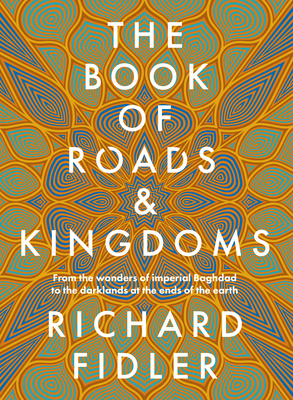
The book of roads and kingdoms

Richard Fidler
A lost imperial city, full of wonder and marvels. An empire that was the largest the world had ever seen, established with astonishing speed. A people obsessed with travel, knowledge and adventure.

When Richard Fidler came across the account of Ibn Fadlan – a tenth-century Arab diplomat who travelled all the way from Baghdad to the cold riverlands of modern-day Russia – he was struck by how modern his voice was, like that of a twenty-first century time-traveller dropped into a medieval wilderness. On further investigation, Fidler discovered this was just one of countless reports from Arab and Persian travellers of their adventures in medieval China, India, Africa and Byzantium. Put together, he saw these stories formed a crazy quilt picture of a lost world.

The Book of Roads & Kingdoms is the story of the medieval wanderers who travelled out to the edges of the known world during Islam’s fabled Golden Age; an era when the caliphs of Baghdad presided over a dominion greater than the Roman Empire at its peak, stretching from North Africa to India. Imperial Baghdad, founded as the ‘City of Peace’, quickly became the biggest and richest metropolis in the world. Standing atop one of the city’s four gates, its founder proclaimed: Here is the Tigris River, and nothing stands between it and China.

Vertical garden using hanging brackets

Roy Jackson
This book would suit a passionate gardener, a novice or a handy person who likes to create artifacts, improve the environment, create a carbon sink, peg back global warming, save some of our endangered flora, purify the air or just for a hobby. This book may give some fresh ideas.

From a small balcony or a tiny courtyard, we can all make a difference. Collectively though as individuals we can change the world and the environment to one of so much beauty and contribute to a healthier planet.

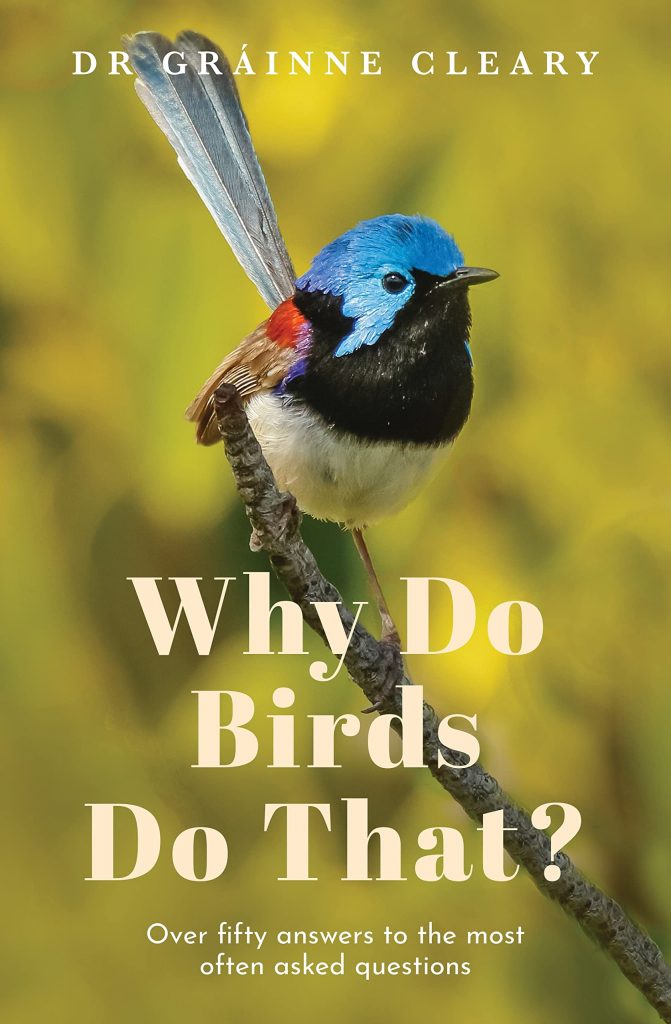
Why do birds do that?

Grainne Cleary
For thousands of years birds have fascinated us. We’ve observed what they do – their behaviours, their characteristics, their survival skills, the food they eat and their habitats – and wondered why they do it.

Why Do Birds Do That? answers many of these often-asked questions, such as: Why do birds sing in the mornings? Why are some birds so colourful and others are not? Why do starlings form murmurations? Why do birds have 3 eyelids? and Why do birds attack their own reflections?

In an easy-to-find question & answer format, Why Do Birds Do That? provides fascinating and comprehensive information about the birds we watch every day.


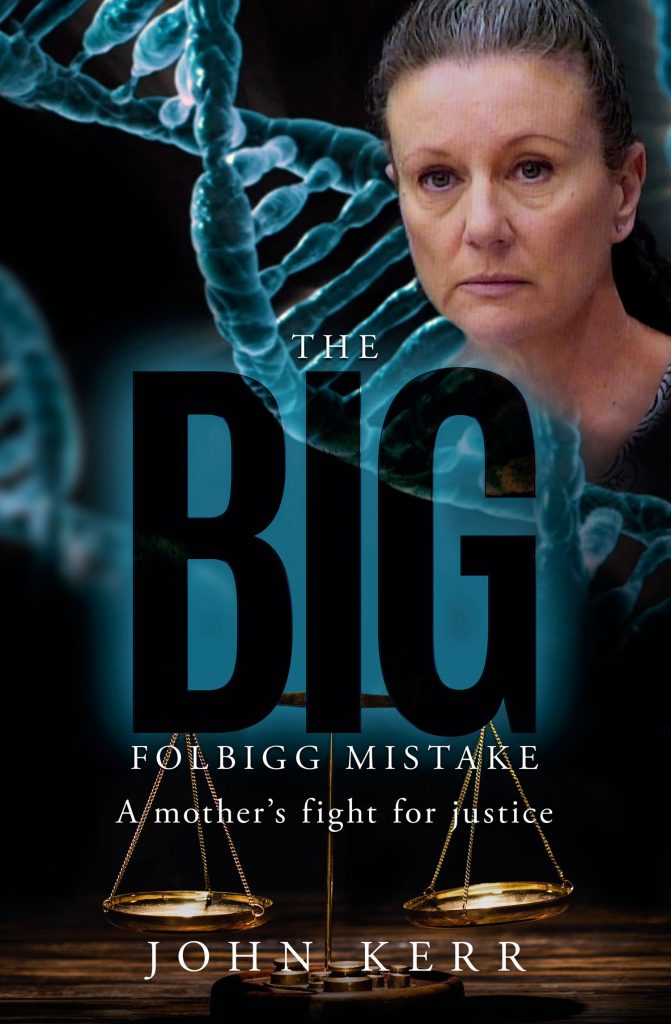
The big Folbigg mistake:

a mother’s fight for justice

John Kerr
Kathleen Folbigg was found guilty of killing her four children by opinions – medical, literary and her estranged husband’s opinion – nearly 20 years ago. There never was hard evidence of homicide in the infants’ deaths. This book traces her life story, the rise and fall of a medical mania that saw so-called ‘smother mothers’ imprisoned and then released as sound science replaced pseudo-scientific nonsense, and how her diaries were mis-read.

The way the case against her was pursued will chill the blood of anyone who has ever gone out, fallen in love and considered having children, as that is all this woman did to get sentenced to 40 years. It explains in the language of the lay person, why the finest minds in Australian science by the score joined in a petition – just let her out, fix your criminal justice system later – in a move without precedent anywhere.
The scientific story is exciting, inspirational and a wake-up call. That Ms Folbigg is still behind bars today is a tale of pig-headedness, scientific illiteracy, poor judgement and perhaps implicit bias. Whatever, a good scrub won’t fix it; some reconstruction is needed. The strong woman at the core of this story has good friends and a legal team whose perseverance will replenish readers’ sense of what can be done. Among the expert witnesses are men and women whose commitment to the truth inspires. Their genetic and medical evidence is here made simple, digestible and compelling. The book lists some ideas for overdue legal reforms.

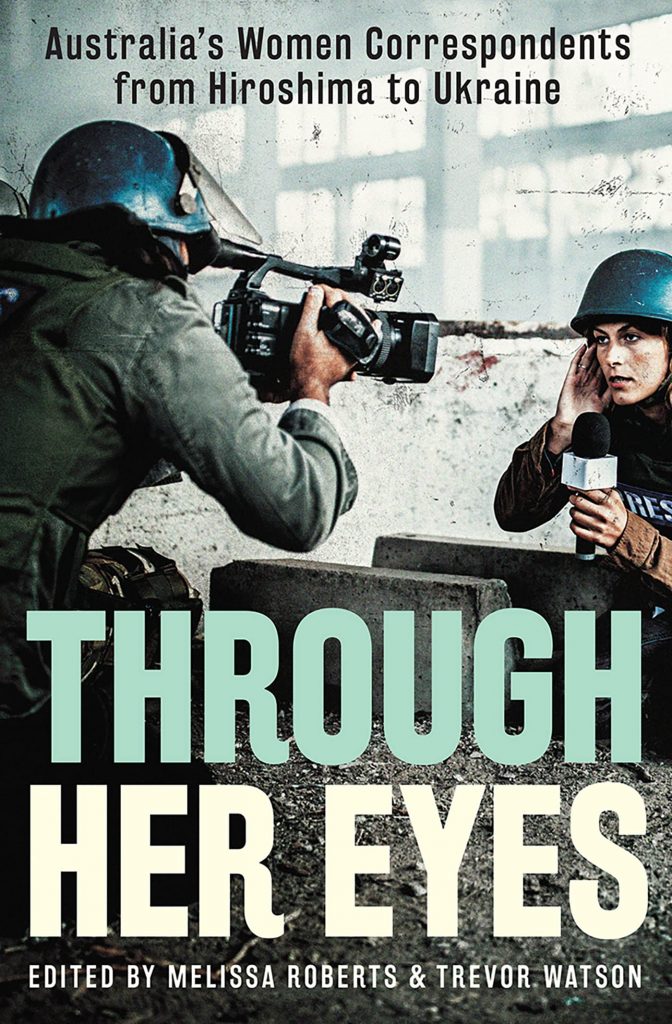
Through her eyes:

Australia’s Women Correspondents from Hiroshima to Ukraine

Trevor Watson, Melissa Roberts
Women correspondents tell their own stories from the frontline – covering the breaking news, the issues and the events that are changing the world. They tell of Russian tanks and Ukrainian mothers fleeing with their children, vicious Afghan warlords, anti-government rebels in Central Africa, terrorist attacks in the United States, and the chaos faced by ordinary people caught up in disasters and political upheaval.

While a woman strapping on a reporters’ flak jacket is now a common sight, there was a time when they were locked out of the big stories because of their gender. Unlike their male counterparts, they needed single-minded determination to score a plum assignment or win a posting to a foreign bureau.
Through Her Eyes tells of the exhilaration that comes with a big story but also the dangers, the risks, the struggle and the big issues women still face, from vicious media trolling to threats of sexual violence.

Through Her Eyes includes well-known women correspondents for major media organisations inside and outside Australia including the ABC, BBC, SBS, CNN, The Associated Press of America, UPI, Reuters, The Times of London, Al Jazeera, China Global Television Network, The Australian, The Sydney Morning Herald, The Age, and the Australian Financial Review.

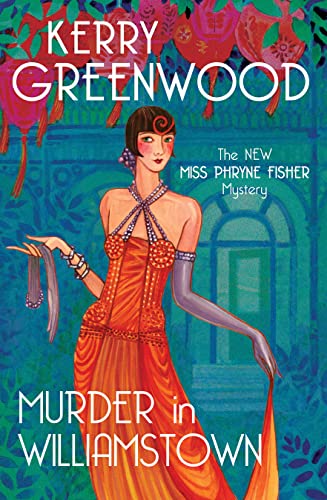
Murder in Williamstown

Kerry Greenwood
Accustomed to both murder and dalliance, Australia’s favourite detective, the inimitable Miss Fisher, returns in a case that will test her tact and judgement to the full. When the redoubtable Miss Phryne Fisher receives threatening letters at her home, she enlists the unflappable apprentice Tinker to investigate. But as the harassment of Phryne threatens to spin out of control, her lover, Lin Chung is also targeted.

Meanwhile, Dot begins to fear that her fiance, newly promoted Sergeant Hugh Collins, has gone cold on setting a date for their wedding. Phryne’s clever daughters, Ruth and Jane, begin their own investigation into suspiciously dwindling funds when they are sent to help at the Blind Institute.

None of this is quite enough to prevent Phryne from accepting an invitation to a magnificent party at the house of the mysterious Hong. When the party is interrupted by shocking tragedy, Phryne gathers all of her unerring brilliance to track down the miscreants. With some unlikely assistance, Phryne is in a race against time to save a pair of young lovers from disgrace and death.

3 Main St Buderim - QLD 4556
(07) 5445 3779