Author Archive | admin

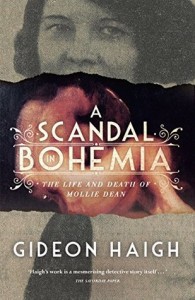
A Scandal in Bohemia

A Scandal in Bohemia Gideon Haigh

As enigmatic in life as in death, Mollie Dean was a woman determined to transcend. Creatively ambitious and sexually precocious, at twenty-five she was a poet, aspiring novelist and muse on the peripheries of Melbourne’s bohemian salons – until one night in 1930 she was brutally slain by an unknown killer in a laneway while walking home.

Her family was implicated. Those in her circle, including her acclaimed artist lover Colin Colahan, were shamed. Her memory was anxiously suppressed. Yet the mystery of her death rendered more mysterious her life and Mollie’s story lingered, incorporated into memoir, literature, television, theatre and song, most notably in George Johnston’s classic My Brother Jack.

In A Scandal in Bohemia, Gideon Haigh explodes the true crime genre with a murder story about life as well as death. Armed with only a single photograph and echoes of Mollie’s voice, he has reassembled the precarious life of a talented woman without a room of her own – a true outsider, excluded by the very world that celebrated her in its art. In this work of restorative justice, Mollie Dean emerges as a tenacious, charismatic, independent woman for whom society had no place, and whom everybody tried to forget – but nobody could.
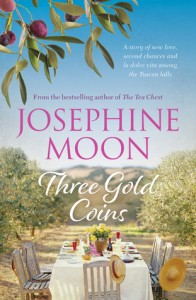
Three Gold Coins

Three Gold Coins Josephine Moon

One coin for love, one for marriage, one to return to Rome.

Two days ago, Lara Foxleigh tossed three gold euros into the Trevi Fountain. Now, she is caring for a cranky old man and living in a picturesque villa, half a world away from her home and the concerns of her loving family.

Soon, it seems as if those wishes she made in Rome just might be coming true, and she may even be able to help heal a fifteen-year-old tragedy.

Until Lara’s past threatens to destroy everything she loves…

Three Gold Coins is a masterfully written celebration of food, family, triumph over adversity, and love – a deliciously imperfect life.

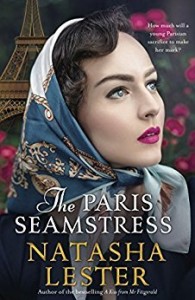
The Paris Seamstress

The Paris Seamstress Natasha Lester

How much will a young Parisian seamstress sacrifice to make her mark in the male-dominated world of 1940s New York fashion? From the bestselling author of A KISS FROM MR FITZGERALD and HER MOTHER’S SECRET.

1940. Parisian seamstress Estella Bissette is forced to flee France as the Germans advance. She is bound for Manhattan with a few francs, one suitcase, her sewing machine and a dream: to have her own atelier.

2015. Australian curator Fabienne Bissette journeys to the annual Met Gala for an exhibition of her beloved grandmother’s work – one of the world’s leading designers of ready-to-wear. But as Fabienne learns more about her grandmother’s past, she uncovers a story of tragedy, heartbreak and secrets – and the sacrifices made for love.

Crossing generations, society’s boundaries and international turmoil, THE PARIS SEAMSTRESS is the beguiling, transporting story of the special relationship between a grandmother and her granddaughter as they attempt to heal the heartache of the past.

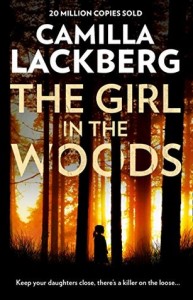
The Girl in the Woods

The Girl in the Woods Camilla Lackberg

No. 1 international bestseller and Swedish crime sensation Camilla Lackberg’s new psychological thriller featuring Detective Patrik Hedström and Erica Falck – irresistible for fans of Stieg Larsson and Jo Nesbo.

A missing child

When a four-year-old girl disappears in the woods just outside Fjllbacka, the community is horror-struck. Thirty years ago, a young girl went missing from the exact same spot, and was later discovered, murdered.

A murder

Back then, two teenage girls were found guilty of the killing. Could it really be a coincidence that one of the girls now a world-famous actress has just returned to Fjllbacka? Detective Patrik Hedstrm starts investigating, with his wife, bestselling crime writer Erica Falck, by his side.

A community torn apart

But as Patrik and Erica dig deeper, the truth becomes ever murkier, because it seems that everyone in the tight-knit community is hiding something. And soon, the residents must confront the fact that they could be harbouring a murderer in their midst.

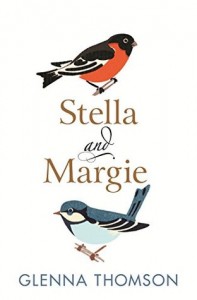
Stella and Margie

Stella and Margie Glenna Thomson

A beautiful novel about two women – a generation apart – thrown together by circumstance, who slowly come to love and understand one another.

Stella and her mother-in-law Margie are two very different women.

Stella is kind, compassionate and just a little chaotic. Margie is prickly, demanding and a stickler for convention. Stella has exciting dreams for the future. Margie has only bitter memories of the past.

When Margie needs help recovering from a major operation, Stella offers her a place to stay. With no other options, Margie returns to the family farm where for decades, until Stella’s arrival, she was the one in charge.

Margie has never made life easy for her daughter-in-law, and that’s not going to change now she’s been made a guest in her former home.

But as the dry summer turns to a beautiful autumn, the two women gradually form an unlikely bond, as the ambitions, secrets, and tragedies that have shaped their lives are slowly uncovered…

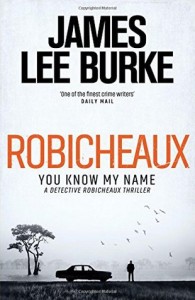
Robicheaux: You know my name

Robicheaux- You know my name James Lee Burke

Burke kicks off Robicheaux ingeniously by placing its hero in a predicament that will horrify but grip long-term followers of the books in particular. A constant of all the novels has been Robicheaux’s struggles with alcoholism, depression and Vietnam trauma. One of Burke’s great strengths has been to gift his protagonist with very human flaws: abiding feelings of anguish, shame, self-disgust and the temptations of rage.

Robicheaux is grieving after being widowed for the third time. As his sobriety finally cracks, he finds himself back on “the dirty boogie”. “They live in me like a snake that slowly swallows its prey,” he says of his demons, “compressing it into a canister of despair and pain.” Prone to psychotic visions of the dead, he reflects that there is “no afterlife but only one life, a continuum in which all time occurs at once, like a dream inside the mind of God”. Alcohol appears to him “like an irresistible thread from an erotic dream you can’t let go of at first light”.

He wakes from an alcoholic blackout to find that he may have torn apart with his hands the man who killed his wife in a car accident. But is he being set up, and if so, why? As ever, the plot opens out to encompass a vivid cast of characters that reflect the singular culture of Louisiana, including a Robert Penn Warrenesque novelist, a charismatic local oligarch with presidential ambitions and a seedy white supremacist. Also in place are Burke’s masterly command of natural description, that gaudy, rambunctious dialogue and his hero’s lyrical meditations on virtue and corruption, shot through with a kind of personal liberation theology.

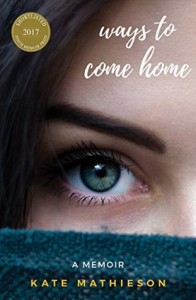
Ways to Come Home

Ways to Come Home

 Kate Mathieson

“I began to notice how everything out there, in the wild, seemed to move. Oceans. Sharks. Wolves. Elephants. Rivers. Nothing stayed in the same place. I wanted to be like them too, and the only way to do this was to keep moving.”

So begins Ways to Come Home, a personal memoir in which contemporary Australian writer Kate Mathieson reflects on the lives we have marked for ourselves – school, university, careers, marriages, mortgages, children, school – and the other life, that one that calls to us from dreams, and out of books, that suggests the life we are living, may not be ours.

Stuck in a life that isn’t wild at all, with nothing to show except a well-adorned house and too many business suits, Kate uses books to vanish from her life. She finds solace in Thoreau and Yeats and Keats, until an old copy of Sylvia Plaths The Bell Jar finds her, whose work she begins to realise, sharply reflects her own life. Plaths’ Esther Greenwood – “slipped easily into a strange and eerie depression. She thought about dying. She kept friends and went out. She pretended to be fine, but she wasn’t… The Esther with too many figs haunted me. I sounded like her. Or she sounded like me.

There I was, fifty years after Plath wrote her novel, standing in my living room, having exactly the same thoughts as Esther. All those figs. And yet the only thing I could smell was the bell jar descending upon me as I begun to stew on the sour juices of myself.” Ways to Come Home” follows Kate as she contemplates the pleasure of letting go and accepting the invitation from her heart to leave the life she has shaped, and be led, instead, by her infinite curiosity for wandering across the world.

Thus begins an elemental journey across Africa, weaving through unchartered lands and sacred places, under skies and stars, through forests and deserts. Kate encourages all of us to be bold, and keep moving, to give sound to the voice within us – urging us to dare to be ourselves, no matter how we may be perceived as a result.

Shortlisted for the 2016 Finch Memoir Prize, Ways to Come Home, is a tale of exile and community, isolation and family, wildness and memory, nature and passion. And what it means, to find our way, back home.

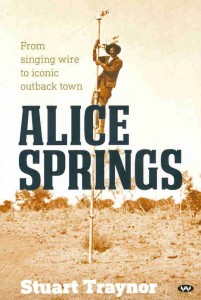
Alice Springs: From singing wire to iconic outback town

Alice Springs- From singing wire Stuart Traynor

In 1870 a colonial government, on the brink of collapse, made an audacious move. South Australia’s squabbling politicians briefly put aside their differences and took the bold decision to run an iron wire to the middle of nowhere and beyond. Stringing the Overland Telegraph Line across the silent heart of the continent was a momentous event in the country’s history. It connected Adelaide to a global network of cables and wire: those travelling up and down the track through central Australia were seldom out of earshot of its hum. Alice Springs was its most important repeater station.

Alice Springs: From singing wire to iconic outback town is the result of eight years of meticulous research unravelling the early history of central Australia’s first white settlement. It contains information, never previously published, about that little outpost – a significant heritage site – and how an iconic town was born nearby, during a goldrush that made few people rich. It is a tale of the country’s heart and some of its most remarkable but little-known characters, and of children torn between two cultures living at the telegraph station after the morse keys stopped clicking in 1932; children under the shadow of the most controversial piece of legislation in Australia’s history. Central Australia has a black history.

Alice Springs is no longer the small, outback community romanticised in Nevil Shute’s novel A Town like Alice. But its people, black and white, are still living on the line.

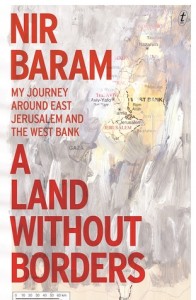
A Land Without Borders

A Land Without Borders Nir Baram
: My Journey Around East Jerusalem and the West Bank

“From horror to fatigue to indifference, an important look forward and back that provides a grass-roots sense… An honest and troubling snapshot of Israel—both Palestinian and Israeli—that reveals the creeping realization that a two-state solution may no longer be possible.”—Kirkus (starred review)
Throughout their youth Nir Baram’s generation were bombarded with news about the Israeli-Palestinian conflict—the injustices, the wrongdoings, the killings. Over the decades, the horror and despair had become habit—he noticed people had begun to give up on the possibility of resolution. Yet, as Baram notes, ‘the vast majority of Israelis—as well as international onlookers— know next to nothing about life on the West Bank, the area at the heart of the conflict they have spent their adult lives dissecting’. Most have never visited the occupied territories, and thus ‘the debate revolves around a theoretical, ill-defined area sketched out in our political imagination.’

This book of reportage emerged from the author’s realization that Israel is separated from the West Bank not only by checkpoints but also, more significantly, by a cognitive barrier. And so began his quest to understand the occupation from both sides. The result is an essential and nuanced journey through places and experiences that receive little coverage.

Baram, widely considered one of the most important intellectual voices in Israel today, faces painful challenges to his personal political views and his hopes for a more peaceful future. Nir Baram has worked as a journalist, editor, and advocate for Palestinian rights. He is the author of five novels in Hebrew. In 2010 he received the Prime Minister’s Award for Hebrew Literature.

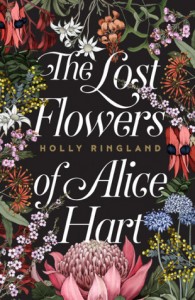
Lost flowers

Lost flowers of Alice Hart Holly Ringland

The most enchanting debut novel of 2018, this is an irresistible, deeply moving and romantic story of a young girl, daughter of an abusive father, who has to learn the hard way that she can break the patterns of the past, live on her own terms and find her own strength.

After her family suffers a tragedy when she is nine years old, Alice Hart is forced to leave her idyllic seaside home. She is taken in by her estranged grandmother, June, a flower farmer who raises Alice on the language of Australian native flowers, a way to say the things that are too hard to speak. But Alice also learns that there are secrets within secrets about her past. Under the watchful eye of June and The Flowers, women who run the farm, Alice grows up. But an unexpected betrayal sends her reeling, and she flees to the dramatically beautiful central Australian desert. Alice thinks she has found solace, until she falls in love with Dylan, a charismatic and ultimately dangerous man.

The Lost Flowers of Alice Hart is a story about stories: those we inherit, those we select to define us, and those we decide to hide. It is a novel about the secrets we keep and how they haunt us, and the stories we tell ourselves in order to survive. Spanning twenty years, set between the lush sugar cane fields by the sea, a native Australian flower farm, and a celestial crater in the central desert, Alice must go on a journey to discover that the most powerful story she will ever possess is her own.

3 Main St Buderim - QLD 4556
(07) 5445 3779